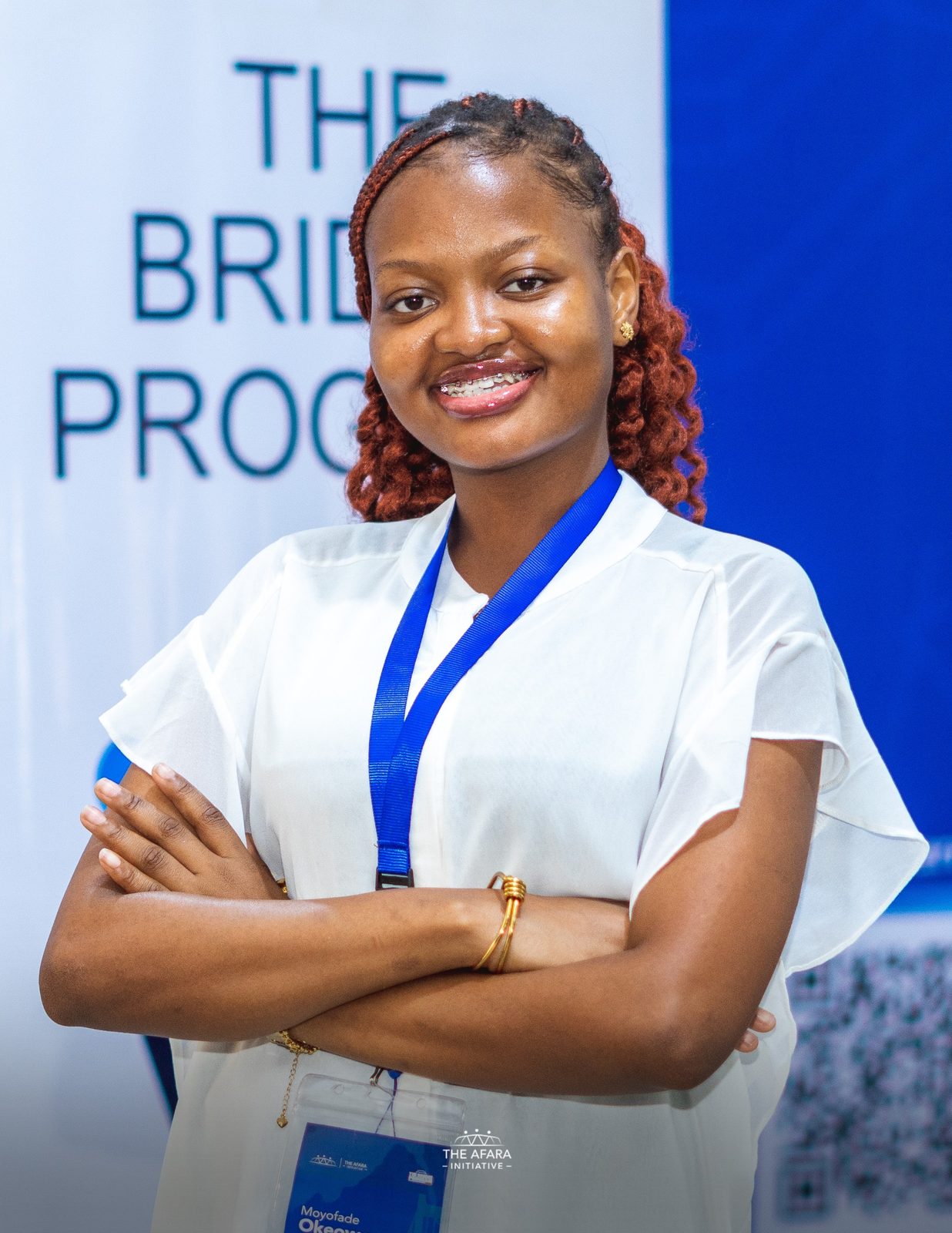
Keep showing up even when it's difficult was the advice an alum of our scholarship said when we asked for her last words but before this realization, Moyofade was on a journey of learning, growth and realization and we spoke about it here:
What made you choose this tech school + program in the first place?
I chose Data Science because I was interested in solving problems with data. It wasn't until I started the program that I realized I had already been applying data science in my everyday life. Going through past exam questions to identify trends and understand a lecturer's style of setting questions was a form of using data to make better reading decisions. I wanted to learn how to do that in a structured way and solve even bigger problems. Receiving the Cyberdata Foundation Scholarship made that dream possible.
If you could describe your first day vs today in 3 words each, what would they be?
I’d say I was nervous, curious and hopeful on my first day. And today, I feel more confident, resourceful, growing
What was the toughest skill or concept you had to conquer? What flipped it for you?
The toughest part for me wasn't one specific concept or skill; it was learning how to think like a data scientist. I realized that knowing how to write Python is one thing but knowing how to ask the right questions is what really makes you a data scientist. One thing my instructor always emphasized was that you must understand the problem first before deciding how to clean or analyze the data. This completely changed my perspective. I kept working on project and with every project I completed, my confidence grew.
Tell me about a project you're most proud of. What problem did it solve?
One project I'm especially proud of was working on an AI-powered mammogram assistant during a hackathon. As the data scientist on the team, I worked with medical imaging datasets, explored and prepared the data, and supported the model development process. It was my first time working with imaging data, and it pushed me to learn new skills. The goal of the project was to assist healthcare professionals in detecting potential breast cancer cases earlier. It was rewarding because it showed me how data science can contribute to solving real healthcare challenges.
Was there a moment you almost quit? What kept you going?
There were moments when I felt overwhelmed and questioned whether I could keep up. But whenever I felt like giving up, I remembered the people who believed in me, the founder of Cyberdata foundation, Dr. Biodun Awojubi, who invested in me through the scholarship. They believed I could succeed and eventually use these skills to empower others. Remembering this kept me going because quitting would mean giving up on more than just myself.
Who here—instructor, classmate, mentor—changed your trajectory? How?
One of my coursemates, who was also a scholarship recipient, had a huge impact on my journey. He had already started learning data science before joining the program, so whenever I got stuck, he was always willing to explain concepts, share resources, and encourage me. Watching his consistency also motivated me to stay disciplined and keep learning.
What's one thing you believed about tech/yourself on day one that you don't believe anymore?
On day one, I believed that people in tech were naturally gifted and that you had to know everything before you could succeed. Now I know that's not true. What matters most is consistency, curiosity, and the willingness to keep learning. No one starts knowing everything.
What skill surprised you? Like, "I didn't know I'd be good at this."
Data storytelling surprised me the most. I initially thought data science was just about writing code, but I discovered that I also enjoy turning data into stories that people can understand and use to make informed decisions.
How did you handle imposter syndrome or comparison with classmates?
At first, I compared my progress with everyone else's, especially those who already had experience. Eventually, I realized everyone starts from a different place. Instead of comparing myself to others, I started measuring my progress against where I was the previous week. That mindset made learning much more enjoyable and helped me appreciate my own growth.
What are you taking from this school that isn't on the syllabus?
Beyond the technical skills, I'm taking resilience, the confidence to tackle unfamiliar problems, and the habit of continuous learning.
Where do you want to be one year from now? What's the first step you'll take next week?
One year from now, I hope to be working as a data scientist, building solutions that create impact while continuing to deepen my machine learning skills. My next step is to keep building my portfolio by working on projects.
What advice would you give someone just starting this program today?
Keep showing up, even when it gets difficult. Don't be afraid to ask questions, build projects before you feel "ready," and remember that consistency beats perfection.
If you could thank one tool, language, or framework in an Oscar speech, which one? Why?
I would thank Python. I started learning Python before I even knew I wanted to become a data scientist, and it became the foundation for everything I've learned since then. It introduced me to programming, gave me the confidence to solve problems with code, and opened the door to opportunities I never imagined. Looking back, learning Python was the first step toward the career I'm building today.